
Delhi logged 23 COVID-19 fatalities on Tuesday, the highest since June 16, and the positivity rate rose to 25.65 per cent with the government directing closure of all private offices, except those in exempted categories.

The pictures and videos of the locals wading through waist deep water in Bawana JJ colony area, waterlogged houses, school and hospital went viral on social media even as teams of engineers from Haryana and Delhi worked on a war footing to plug the breach.

The Delhi government has called a meeting of the Delhi Disaster Management Authority to discuss steps that need to be taken in view of threat of a new Covid-19 variant from African countries, Chief Minister Arvind Kejriwal said on Friday.

In view of a spurt in coronavirus cases in the city, the Delhi government on Wednesday made wearing of masks mandatory in public places and imposed a fine of Rs 500 on violators.
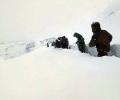
The avalanche hit the BRO camp between Mana and Badrinath between 5:30 am and 6 am on Friday, burying the workers inside eight containers and a shed, according to the Army.
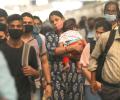
Amid a spike in coronavirus infections in some states, the Delhi government is likely to ask travellers from five states, including Maharashtra, Kerala and Punjab, to show negative COVID-19 test report before entering the national capital, officials said on Wednesday.

Chief Minister Arvind Kejriwal, who visited the Wazirabad water treatment plant, warned of rationalising water supply to deal with "acute shortage".
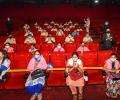
The city witnessed an unprecedented surge of cases and deaths during the second wave of coronavirus in April and May. The situation seems to have been improving over the past few weeks, allowing the government to reopen the city in a phased manner.
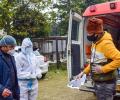
A DDMA meeting, chaired by Lieutenant Governor Anil Baijal and attended by Chief Minister Arvind Kejriwal, also discussed ways to strictly enforce existing restrictions to check the rising cases of the coronavirus and its Omicron variant.

Rat-hole mining may be illegal but the talent and experience of rat-hole miners were used in the rescue operation to save the 41 workers trapped in the Silkyara tunnel, a National Disaster Management Authority member said on Tuesday.

Six hospitals in the national capital have exhausted their oxygen supply while seven others have less than five hours of oxygen left, Deputy Chief Minister Manish Sisodia told Union Health Minister Harsh Vardhan on Thursday.

The statements on Joshimath are creating confusion not only among affected residents but also among citizens of the country.
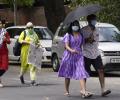
The India meteorological department said heatwave conditions will persist for at least two more days.
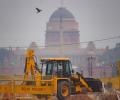
Describing the Central Vista project as 'vital and essential', the Delhi high court on Monday allowed construction work on the project to continue and imposed a fine of Rs 1 lakh on the petitioners for their 'motivated' plea.
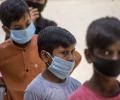
The number of school students testing positive rose on Friday raising concerns among parents with the Delhi government telling school authorities to close specific wings or classrooms wherever needed.

Several Indian states bordering Pakistan have implemented stringent security measures, including school closures, blackouts, and cancellation of leave for police and administrative personnel, in response to escalating tensions between India and Pakistan. These measures were taken after India conducted airstrikes on terror infrastructure in Pakistan in retaliation for the April 22 Pahalgam massacre. Punjab, Haryana, Rajasthan, Gujarat, and West Bengal have all implemented these precautionary measures.

Deputy Chief Minister Manish Sisodia also announced that during weekdays, government employees, barring those engaged in essential services, will be asked to work from home, while private offices will remain open with 50 percent capacity.

The Delhi Metro will operate at 50 per cent capacity and markets and malls in the national capital will open on an odd-even basis from June 7, Chief Minister Arvind Kejriwal said on Saturday as he announced further relaxations in lockdown.
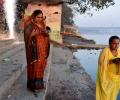
The Delhi Disaster Management Authority (DDMA) in an order last week prohibited Chhath Puja celebrations at public places, including riverbanks, water bodies and temples, in view of the COVID-19 situation.
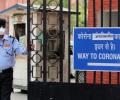
A new Omicron sub-variant has been detected in the majority of samples taken from Covid patients in Delhi as part of a study at the LNJP Hospital in the national capital.

The weekend curfew, aimed at breaking the chain of spiralling coronavirus infections, was clamped at 10 pm on Friday and will continue till 5 am on Monday.
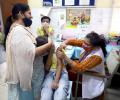
This was the maximum number of cases recorded in Delhi since February 10 when 1,104 infections were reported.

Monitored by the National Disaster Management Authority, the mock drills were carried out simultaneously at Rajiv Chowk (terror attack), Chawri Bazar (toxic gas release), Rithala (bomb blast at parking area) and Shastri Park (call about planting of bomb at train depot) at around 6:15 am.
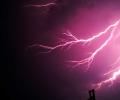
Lightning claims more lives in India annually than any other extreme weather event. Between April and July this year alone, 1,621 people died due to lightning strikes.

Poor land-use planning, indiscriminate approvals of building plans and the absence of disaster-risk assessment in urban design have resulted in what experts term concentrated concretization, predisposing cities to disaster risks

If they act now, they can reshape the strategic map of Asia without firing a shot. If they wait, the next opportunity will come only after a serious Taiwan Strait incident -- by which time the price will be far higher, and the room for boldness far smaller -- the opportunity may well be lost by then. The question is no longer whether this can or should be done, points out Varun Arya.

The Delhi Disaster Management Authority (DDMA) on Friday allowed Chhath Puja celebrations at designated sites in the city except the banks of Yamuna river.

In view of a persistent rise in COVID-19 cases, the Delhi Disaster Management Authority (DDMA) on Tuesday ordered that there will be no public celebrations in the national capital for upcoming festivals such Holi and Navaratri. Considering the rise in COVID-19 cases, the Brihanmumbai Municipal Corporation (BMC) also announced that Holi celebrations, on March 28 and 29, will not be permitted in both private or public places.
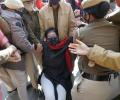
The Aam Aadmi Party has alleged misappropriation of over Rs 2,400 crore in the North Delhi and South Delhi municipal corporations, and had announced to stage protests outside the residences of Shah and Lieutenant Governor Anil Baijal from Sunday till the probe is ordered.

The order, listing various allowed and restricted activities because of the Covid pandemic, will come into effect from November 1.

Amid a spike in Covid-19 infections in some parts of the country, the Centre on Wednesday asked states and Union territories to consider imposing local restrictions in public observance of the upcoming festivals and limit or do away with mass gatherings for effective control of the pandemic.
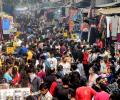
Calling malls, cinema halls, weekly markets, metro services and religious places "superspreader" areas, the Delhi government has directed all district magistrates to greatly intensify enforcement of COVID-19 norms in such places in view of a persistent rise in cases in the city.

In view of the rising Omicron threat, Delhi Chief Minister Arvind Kejriwal on Thursday said that the state government has decided to strengthen the home isolation module since the new variant of COVID-19 causes mild infection.

Long queues of passengers were seen outside various Delhi Metro stations on Wednesday morning, a day after new restrictions were put in place by authorities, including running of its trains with only 50 per cent seating capacity and no provision for standing for commuters, in view of rising cases of COVID-19 in Delhi.
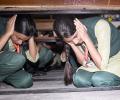
India conducted nationwide civil defence mock drills simulating multiple hostile scenarios like air raids, fire emergencies, and rescue operations across several states and union territories. The drills, dubbed 'Operation Abhyaas,' aimed to enhance emergency preparedness in light of recent terror attacks. The exercises involved coordinated efforts by various agencies, including civil defence personnel, police, fire and emergency services, and the military. Mock drills were conducted at various locations, including railway stations, malls, and high-rise buildings, showcasing the response capabilities of authorities in different emergency scenarios. The drills highlighted the importance of public awareness and cooperation in dealing with real-time emergencies.
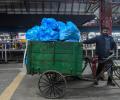
A stampede at New Delhi Railway Station on Saturday night claimed 18 lives, including 11 women and 5 children. Thousands of passengers, mostly Maha Kumbh pilgrims, crowded the station to board trains to Prayagraj, leading to a surge of people that became impossible to manage. The chaos unfolded when a last-minute platform change announcement caused confusion and panic, resulting in a crush of people at an escalator. As dawn broke, railway staff began the grim task of cleaning up, while grieving families gathered at the hospital to identify their loved ones.
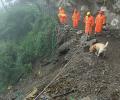
The labourers, who are said to be of Nepali origin, were engaged in the construction of a hotel.
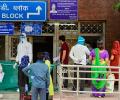
The move may trigger a confrontation between the AAP dispensation and the LG office.
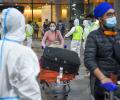
The Delhi government had earlier declared that random testing of coronavirus will be held across airports, railway and bus stations.

Around 200 schools in Delhi-NCR on Wednesday morning received a hoax bomb threat via email which led to widespread panic among parents and students, prompting authorities to suspend classes and ask parents to pick their wards from the school.
